Rising 4,782 metres, the mountain of Cerro Rico towers over the valley of Potosí. Nearly 500 years after its discovery and the start of mining by Spanish settlers, its silver, lead, zinc and tin deposits are still being worked. Three to five people die every week, usually in rockfalls. Miners have a life expectancy of 45: silicosis eats away at their lungs.
The men of Potosí know it. For 500 euros a month, and despite the risks, they keep going down into the bowels of Cerro Rico to find the rare vein that will lift them out of poverty. A UNESCO World Heritage Site since 1987, Potosí has been on the list of World Heritage in Danger since 2014.
01The White Horse. Peru, Vinicunca, August 2018.
02At dawn, the miners prepare to join the mountain of Cerro Rico. Here in a barracks that serves as a cloakroom and rest room between two descents in the bowels of the mine. Potosí, Bolivia, august 2018.
03A miner is waiting for the collective taxi that will take him to Cerro Rico. Some come on foot from their neighborhood of Calvario. The miners are organized in autonomous cooperatives since the withdrawal, in 1995, of the Bolivian state of the sector. Potosí, Bolivia, August 2018.
045:30 in the morning. Collective taxis dump men by the dozens who will rush into the veins of Cerro Rico for 8 hours of toil. Descended from collective taxis, the miners are preparing to join their barracks not far from the mine. Potosí, Bolivia, September 11, 2018.
05A minor observes the city of Potosí located below. Working conditions have not changed for five centuries. Potosí, Bolivia, September 11, 2018.
06Each miner joins his gallery. Miners in Potosi extract from the Cerro Rico the now-exhausted silver ores of lead, zinc and tin under extremely difficult and dangerous conditions. Potosí, Bolivia, September 11, 2018.
07The exploitation of the mines is organized into cooperatives. The miners are independent and are the owners of the mines they dig. However, they must pay back part of their earnings to the cooperative. Arnold, 46, manages one of them: the Compotosi cooperative. Potosí, Bolivia, September 11, 2018.
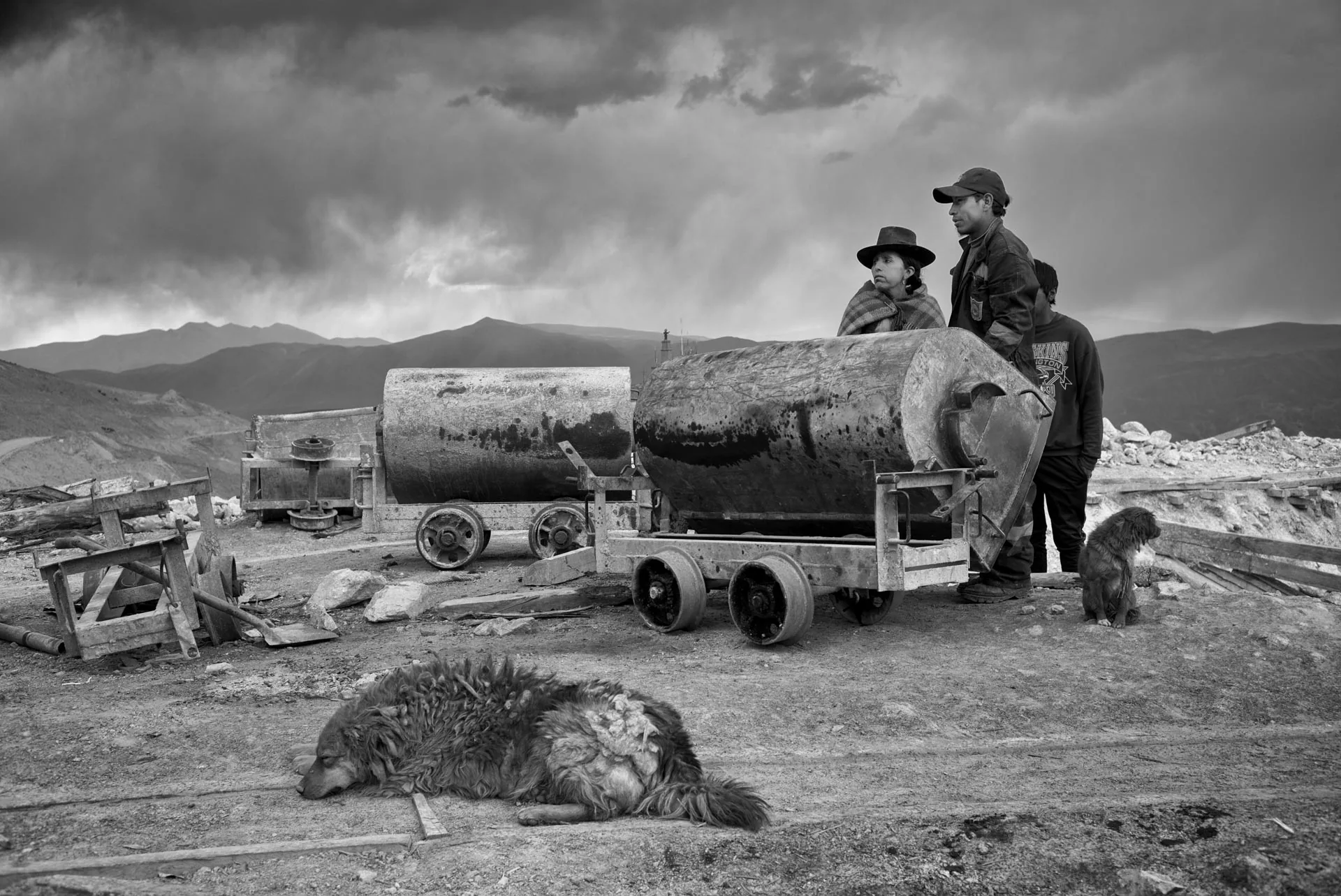
08The wife of a miner watches the equipment as it leaves the mines. Potosí, Bolivia, September 11, 2018.
09The miners put the minerals back in a wagon that they roll on broken rails. In muddy water, they are often 4 to push the cart which, when filled, can weigh up to a ton. Potosí, Bolivia, September 11, 2018.
10Potosí, the highest city in the world (in front of Lhasa in Tibet) is also one of the deadliest places: the extraction is done by hand, at best using shovels and picks, sometimes with dynamite. The extractions are done with pickaxe and dynamite. Potosí, Bolivia, September 11, 2018.
11Francisco, 43, lived in Argentina. Two years ago, he moved to Potosí with his family to earn a better living. Francisco examines a piece of money in a gallery located at level -3 of the mine. In this part of the mine, the temperature is 45 degrees. Oxygen is rare. Potosí, Bolivia, September 11, 2018.
12El Tio (Uncle) is a deity of the underworld and hell. Several clay statues scattered in the mines receive offerings (eg cigarettes, coca leaves, candies and alcohol), in order to gain benevolence. He is seen as the protector of the mine. A devil with a huge penis is his representation. Women are prohibited in the mines. Potosí, Bolivia, September 11, 2018.
13Torches flash through the narrow corridors of the mine. After a few turns, they stop on a vein of zinc. The deposit of money being, today, almost exhausted. Potosí, Bolivia, September 11, 2018.
14Minors are paid according to the weight and quality of what they come out of the mountain. Potosí, Bolivia, September 11, 2018.
15Two miners meet after a hard day's work. One holds a bottle of alcohol (96 degrees) of Puro. Puro is sold in stalls adjoining the mountain. Alcohol makes them forget their difficult working conditions. Potosí, Bolivia, September 11, 2018.
16The miners work eight hours a day. Silica dust causes silicosis, a lung disease caused by the inhalation of silica dust particles. The only known cure is lung transplantation. No other treatment has proven effective. Potosí, Bolivia, September 11, 2018.
17The hands of a minor. The miners work eight hours a day. Silica dust causes silicosis, a lung disease caused by the inhalation of silica dust particles. The only known cure is lung transplantation. No other treatment has proven effective. Potosí, Bolivia, September 11, 2018.
18Nearly 15,000 miners work in the mines of Cerro Rico. A leurs côtés, les chiens sont omniprésents. The Spanish began mining the silver deposits in 1545. Today, due to its continuous exploitation for several centuries, the Cerro Rico, which has more than 600 entries galleries, is subject to high risk of collapse. Potosí, Bolivia, September 11, 2018.
With your consent, Google Analytics measures visits to the site, with no advertising. Learn more