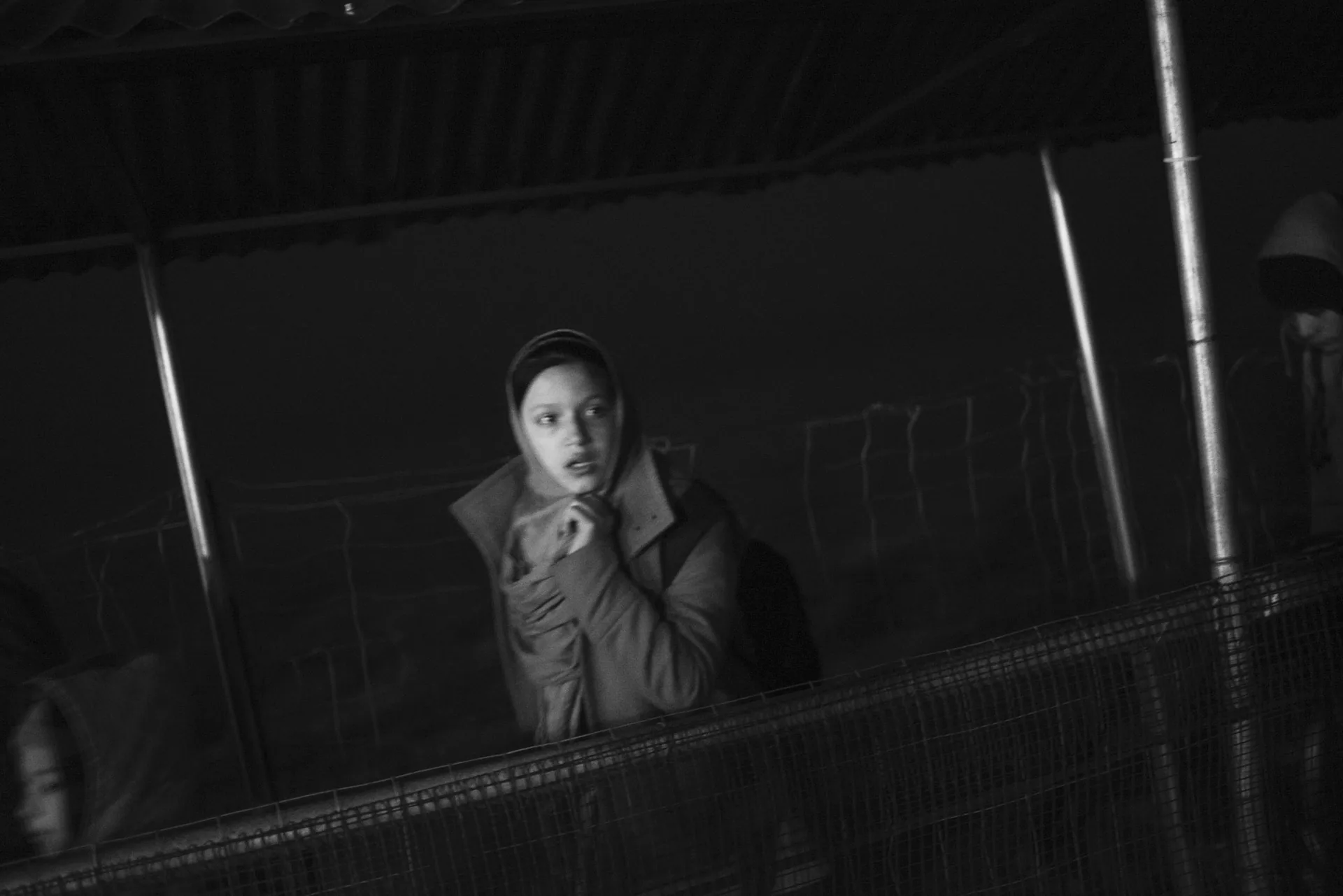
The Greek islands remain the main gateway for migrants into Europe. Once registered on the islands, they travel to Piraeus, the port of Athens, and take the bus to Idomeni before leaving Greece. The gradual closing of crossings along the Balkan route has turned it into a dead end for refugees, who are stranded in Greece, especially in Athens, where a parallel economy is emerging. One more crisis for Greece to handle.
Note: on 21 February 2016, the border between Greece and Macedonia was closed to Afghan migrants. Macedonian authorities still let Syrians and Iraqis through, but crossings have slowed sharply.
01A craft stranded on the island of Lesbos. This boat left Turkey with 300 migrants aboard crashed a month ago against the rocks of the port of this small village. The fishermen recover some of the pieces from the wreckage. Lesbos, Greece. February 2016.
02Moria Migrant Registration Center. Half of the migrants who enter Europe pass through this place. Those who remain are mainly Moroccans, Pakistanis and Iranians. Lesbos, Greece. February 2016.
03Moria Migrant Registration Center. Half of the migrants who enter Europe pass through this place. Those who remain are mainly Moroccans, Pakistanis and Iranians. Lesbos, Greece. February 2016.
04Twelve kilometers separate the port of Mytilene from the camp of Moria. A distance that costs ten euros for the premises, but the taxi drivers show a tariff that can amount to 90 euros for the migrants. Lesbos, Greece. February 2016.
05A woman sits in a Greek ferry before embarking on a long road to Macedonia. To reach Austria, it takes on average fifty hours. February 2016.
06Migrants from the Greek island of Kos embark on a Greek ferry to Athens. February 2016.
07Migrants from the Greek island of Kos embark on a Greek ferry to Athens. February 2016.
08A ferry has just landed in Athens with about 250 migrants, including many children and elderly people, with their suitcases and their survival blankets. Greece, February 2016.
09A ferry has just landed in Athens with about 250 migrants, including many children and elderly people, with their suitcases and their survival blankets. Greece, February 2016.
10In Athens, on the Port of Piraeus, volunteers and NGOs are busy distributing water and food. Greece, February 2016.
11Moria Migrant Registration Center. Half of the migrants who enter Europe pass through this place. Those who remain are mainly Moroccans, Pakistanis and Iranians. Lesbos, Greece. February 2016.
12Zaki, Afghan, is 42 years old. He arrived on the Greek island of Samos after spending 2h30 on the Aegean Sea. He now wants to join his friends in Hamburg, Germany. Here on a bus to the Macedonian border. February 2016.
1310 hours bus ride. This is the average time it takes to reach the Macedonian border. All are exhausted but know that the road is still long. February 2016.
14A video taken by a refugee during his crossing of the Aegean Sea. A crossing that lasted almost 7:00. February 2016.
15This morning, about a hundred migrants will take the corridor on the border between Macedonia and Greece. Only Syrians, Afghans or Iraqis are allowed to pass. Idomeni, February 2016.
16This morning, about a hundred migrants will take the corridor on the border between Macedonia and Greece. Only Syrians, Afghans or Iraqis are allowed to pass. Idomeni, February 2016.
17The border is closed and then reopened every fifteen minutes. The refugees will have to walk along the railway. Idomeni, February 2016.
18The translator of the Greek NGO Praksis explains to this man that he will not be able to cross the border because he is Iranian. Idomeni, February 2016.
19Migrants who can not cross the Greco-Macedonian border are taken back by the police. They will return to Athens. Idomeni, February 2016.
20Athens city center is the first stop on the European continent for a majority of migrants arriving in Greece. Migrants in transit to the capital have settled in Victoria Square and Pedión tou Áeros Park. These two locations in the center of Athens have been transformed into open-air dormitories. Athens, February 2016.
21This morning, about a hundred migrants will take the corridor on the Greek-Macedonian border. Only the Syrians, Afghans and Iraqis could cross it. Passages are slowed down. Idomeni, February 2016.
With your consent, Google Analytics measures visits to the site, with no advertising. Learn more